Design jobs a volunteer would take
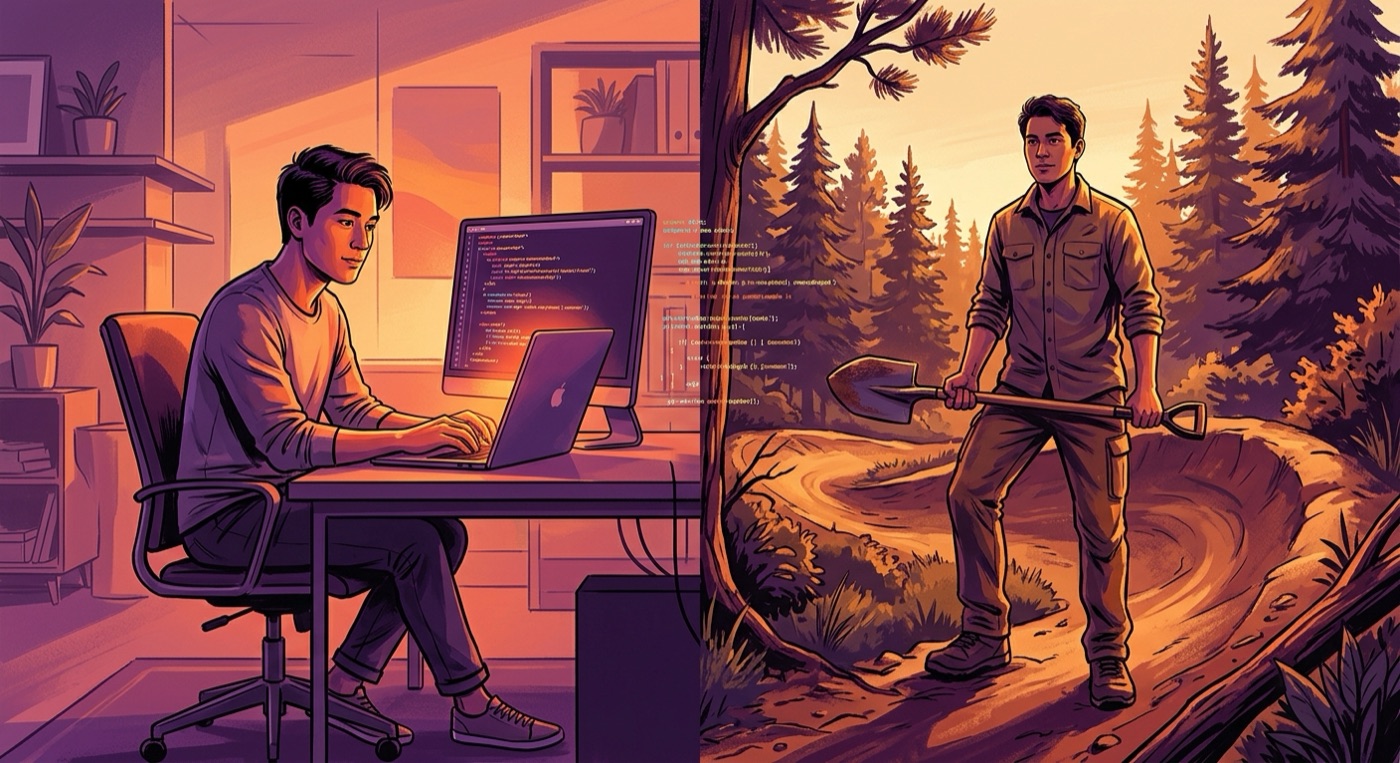
My weekends look nothing like my weekdays. The skills are identical.
Monday to Friday, I lead tech at ICE Tech — building systems 35+ countries rely on. Saturdays, I’m at Holmen Dirt or in Rude Skov with a shovel, shaping trails for kids and adults to ride. I’ve written before about how the two teach each other: systems thinking, building for others, iteration.
But here’s what volunteer leadership has really taught me — and what most workplaces get wrong:
Leading people isn’t about getting effort out of them. It’s about seeing them and showing up for them.
Why volunteers keep coming back
At Holmen Dirt, nobody gets a salary. What keeps people coming back in the rain is three things:
- Ownership and purpose. The community respects what you bring. You shape the decisions. You see the impact.
- You ride what you build. The person shaping the lip is the same person sending it. You feel every shovel of dirt in the landing. Quality isn’t optional when you’re the end user.
- A leader who actually leads. Someone who cares about each person — not as a resource, but as a person. Someone who sees their potential and backs them to grow into it. Someone who’s in the trench with them, shovel in hand, not pointing at a plan from the sidelines. Honesty and fairness — both directions.
Where most jobs break
Most corporate jobs break more than one of these. You build something, someone else uses it, a third person measures it, a fourth person decides if it was worth doing — and the manager you rarely see shows up to ask why motivation is low.
How great workplaces rebuild the connection
- Trust people to make decisions — don’t just assign tasks
- Share the upside. Profit, equity, outcomes. When people own a piece of what they build, they stop being a resource and start being a partner.
- Show them who the work is for — real users, not OKR line items
- Give room to shape the work, not just execute
- Be in the work, not above it. Lead by example — shovel in hand.
- Be honest. Be fair. Expect the same back.
- Say thank you. Often. Publicly. Specifically.
If your employees need constant oversight to ship, the problem isn’t them. It’s that you’ve designed a job no volunteer would ever take.
The best teams I’ve worked with felt like the best crews I’ve dug with. People showed up because they wanted to — and the work showed it.
Voluntary work, a sports club, an evening side project — it’s not a distraction from your career. It’s the clearest lesson in how people actually want to be led.